
The Quarterly Briefing: What's Launching in Smart Food Safety
The divide between leading programs and those struggling to keep up isn't just about effort, it’s about infrastructure.

Q2 2026
For too long, facilities have been forced to accept dead zones, delayed findings, manual reporting, and fragmented systems as the cost of doing business.
These aren't just technical inconveniences. They are operational drains that force teams into a reactive state. When data entry stops at the cooler door or deviations aren't flagged until the next morning, programs bleed time into low-value manual cleanup and autopsies of past mistakes.
In The Quarterly Briefing, we cover the new releases defining smart food safety. This quarter, four new frameworks are helping FSQA leaders evolve from manual oversight to live intelligence, eliminating the age-old blind spots that make facilities reactive.
1. Continuous Input: Solving for Connectivity
The physical reality of food processing frequently creates dead zones. Expansive facility footprints, combined with thick concrete and remote locations almost always produce spotty signal. When connection drops, digital data entry typically stops, leading to missing records, duplicate entries, and delayed catch-up that undermines the entire program's integrity.
The Connectivity release ensures that food safety never pauses for a connection:
-
Uninterrupted WorkflowOperators can continue working in records without any signal, ensuring data is captured at the moment of truth.
-
Automated SyncRecords enter an offline queue and automatically submit the moment a connection is restored.
By eliminating manual re-entry and scanned paper, managers shift their focus from administrative cleanup to high-value coaching. This transition does more than just reclaim time; it preserves reporting integrity by ensuring data is captured accurately at the source, regardless of location or connectivity.
.png?width=400&height=222&name=1%20connectivity%20release%20(1).png "1 connectivity release (1)")
2. Real-Time Response: Speeding Detection and Resolution
Operators often struggle to remember a myriad of overlapping rules, specs, and limits that vary conditionally with products, locations, customers, and more. As a result, findings often go unnoticed at the time of submission, until a manager uncovers them hours or days later. This reliance on manual review prevents immediate coaching, and often allows minor deviations to escalate into major risks.
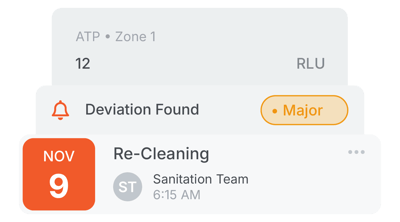
The Deviations release transforms static forms into active controls:
-
Automated FlagsConfigurable rules turn complex, conditional specs into real-time findings, identifying issues the moment data is entered in records.
-
Severity GradingRules automatically sort deviations as Minor, Major, or Critical to cue notifications and follow-ups, while helping teams prioritize their focus.
-
Controlled EscalationDeviations aren’t just “noted.” Resolutions are structured, assigned, and tracked through a transparent digital chain of command, closing findings with audit-ready evidence.
A recent case study with Tree Island Yogurt validates the impact of this shift, showing a 50% reduction in deviation management time.
By finding and closing issues faster, facilities reduce internal holds and scrap. Preventing non-compliant shipments also reduces external complaints and returns, directly lowering the cost of quality.
3. Live Insight: Ending Rear-View Reports
Most FSQA managers are data-rich but insight-poor, spending hours manually patching spreadsheets only to view "cold" data that is already out of date. This creates a culture of gut-feel decisions rather than precision management.
The Insights release provides a clear narrative of the floor:
-
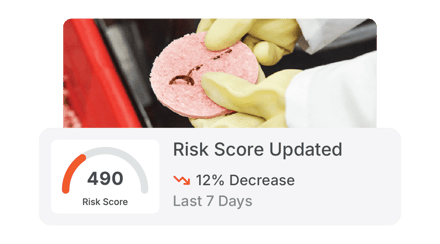
Risk ScoringProgram performance is scored live, demystifying technical data with an objective, continuous measurement that every team member can understand and apply to their activities.
-
BenchmarkingInstantly stack-rank performance by location and team to identify exactly where to point attention and coaching resources.
-
InvestigationEasily compare risk categories and drill down into the missed activities and deviations shaping results.
By demystifying complex FSQA data into actionable, live insights, teams gain an objective measurement of program health that drives immediate behavioral change on the floor. Managers move from managing paperwork to guiding decisions and empowering culture.
4. Integrated Hubs: Dissolving Data Siloes
When food safety tools operate in isolation, critical data is hidden from other key business metrics like throughput or financial performance. These data siloes create a massive burden to clean and patch intel for executive decisions. For food safety to be viewed as more than just a cost center or compliance function, its data must enrich other tools and teams.
The Integrations release turns FSQA into a central intelligence hub:
-
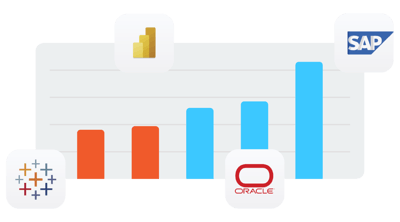
API AccessConnect Provision to any platform and automate the flow of information across the enterprise.
-
Pooled AnalyticsExport and combine FSQA data with other inputs, supporting BI tools to uncover the deeper correlations that drive results.
By automating the historical burden of manual data export, teams enable continuous data pooling that speeds decision-making and facility throughput.
Looking Ahead: What's Shaping Q3
The shift from paperwork to intelligence is just beginning. Throughout Q2, Provision is focused on evolving document controls, turning static compliance binders into live pulses that guide teams and supply chains every day.
To stay on top of the latest releases shaping smart food safety, register for the next Quarterly Briefing.
